
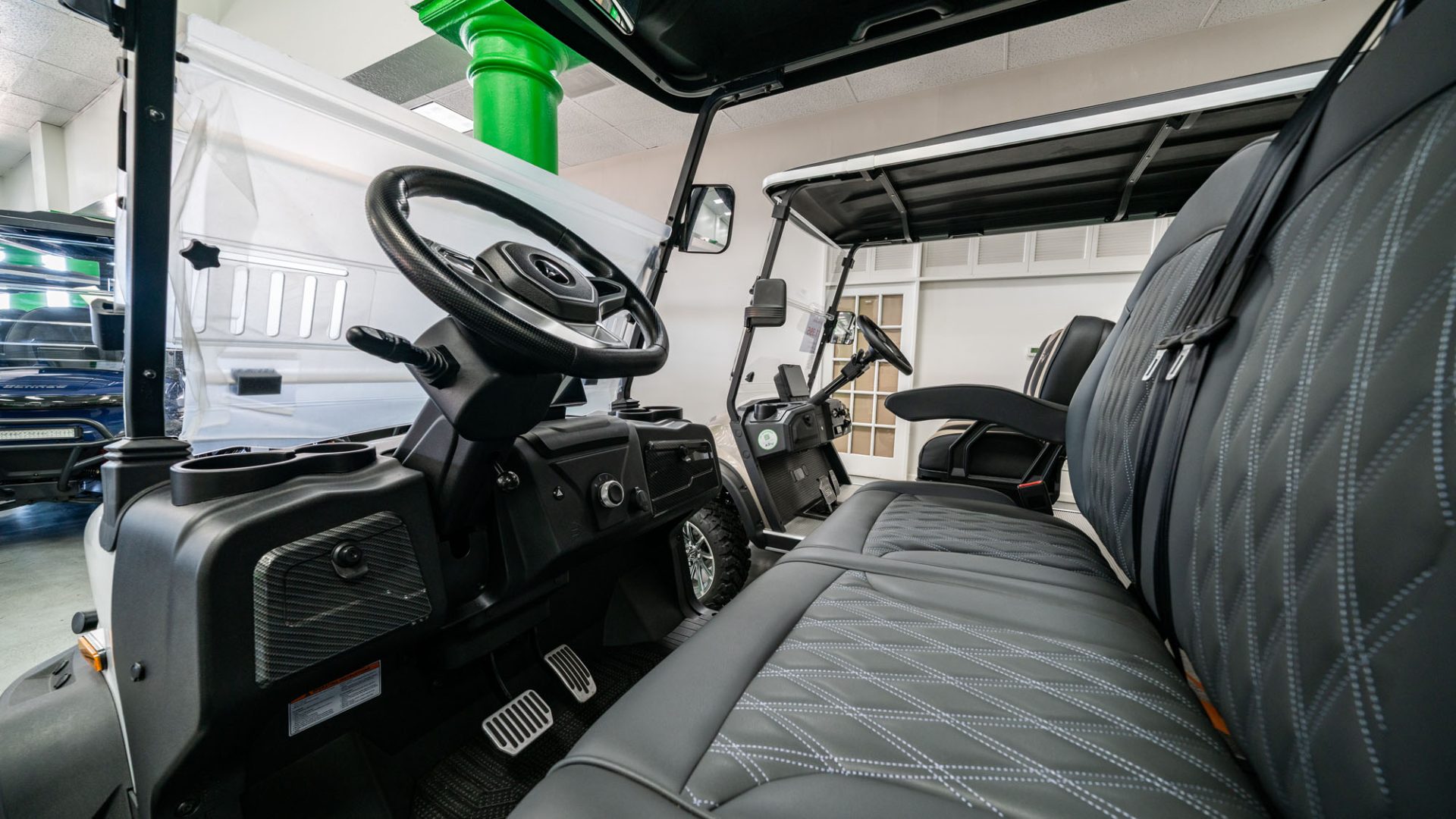
Golf carts are a convenient way to travel around neighborhoods, golf courses, resorts, retirement communities, and private properties throughout Arizona. Although they are smaller and slower than passenger vehicles, golf carts still require careful driving and responsible passenger behavior.
A golf cart can tip during a sharp turn, lose control on a slope, or throw an unsecured passenger from the seat. Children face added risks because most golf carts were designed for adult riders and do not provide the same protection as a passenger car.
Safe operation starts with choosing the right cart, understanding where it may be driven, inspecting important components, and making sure every passenger follows basic rules. These golf cart safety tips can help reduce risks for drivers, passengers, children, and pedestrians.
Understand That a Golf Cart Is Still a Motorized Vehicle
It is easy to become less cautious in a golf cart because it feels open, relaxed, and simple to operate. However, a golf cart still has enough speed and weight to cause a serious injury.
Drivers should treat a golf cart much like any other motorized vehicle. That means paying attention, following traffic rules, avoiding distractions, and adjusting speed for the surrounding conditions.
Common golf cart accidents can involve:
- Sharp turns
- Passengers falling from the cart
- Collisions with vehicles or objects
- Rollovers
- Sudden braking
- Driving on steep slopes
- Inexperienced drivers
- Overloading the passenger area
Many of these incidents are preventable when drivers avoid unnecessary risks and passengers remain properly seated.
Choose a Golf Cart with the Right Safety Features
Safety begins with the cart itself. If you regularly carry family members or guests, look for a model equipped with practical passenger and driving features.
Important features may include:
- Seat belts for each seating position
- Forward-facing passenger seats
- Headlights and taillights
- Brake lights
- Turn signals
- Side and rearview mirrors
- A horn
- A windshield
- Grab handles
- A reliable parking brake
Not every cart includes all these features from the factory. Some may require professionally installed accessories or safety equipment.
Passenger capacity also matters. Never carry more people than the cart is designed to seat. Passengers should not sit on laps, stand on the rear platform, hang from the side, or ride in a cargo area.
If you are choosing between two-, four-, and six-passenger models, review our guide to choosing the right size golf cart.
Require Every Passenger to Stay Seated
Passengers should remain seated and facing the intended direction of the seat whenever the cart is moving.
Standing, turning around, leaning outside the cart, or changing seats can shift weight and make the vehicle less stable. This is especially risky during turns, braking, or travel across uneven pavement.
Before moving the cart, remind passengers to:
- Sit fully on the seat
- Use the seat belt when one is available
- Keep arms, legs, and belongings inside
- Hold onto a grab handle when appropriate
- Wait until the cart stops before getting out
The driver should not begin moving until everyone is seated and ready.
Rear-facing seats require added caution. Passengers may have less warning before a stop or turn, and they can be more vulnerable to falling if they are not seated properly.
Follow Special Golf Cart Safety Rules for Children
Children should never be treated like smaller adult passengers. Golf carts generally lack the enclosed body, child-restraint anchors, airbags, and other protective systems found in passenger vehicles.
The Center for Injury Research and Policy at Nationwide Children’s Hospital recommends limiting passengers to adults and children who are at least six years old. It also notes that most golf carts are not designed to safely transport very young children and that car seats are not appropriately tested for use in most golf carts.
Parents and caregivers should follow these precautions:
- Do not transport infants or very young children in a golf cart
- Never hold a child on your lap while the cart is moving
- Do not assume a car seat makes a golf cart safe for a small child
- Seat children in a proper passenger position
- Use an available seat belt that fits correctly
- Keep children away from rear cargo platforms
- Never allow children to stand or move between seats
Give children a clear reminder before every trip. They should stay seated, keep their hands and feet inside, and wait for an adult before entering or leaving the cart.
Only Allow Responsible, Qualified Drivers
A golf cart may appear easy to operate, but steering, braking, turning, and judging traffic require experience and good judgment.
Nationwide Children’s recommends that golf cart drivers be at least 16 years old. Communities, golf courses, resorts, and private properties may have stricter rules.
Do not allow an unlicensed or inexperienced child to drive simply because the cart is being used on private property. Private roads and community paths can still include pedestrians, parked cars, intersections, curbs, slopes, and other hazards.
The driver should understand:
- How to accelerate gradually
- How much distance is needed to stop
- How to use the parking brake
- How the cart handles with passengers
- Where the cart is permitted
- How to operate lights and signals
- How to safely reverse
Drivers should also know whether the cart has regenerative braking, mechanical brakes, or other features that may affect how it slows down.
Drive at a Safe Speed
Just because a golf cart can reach a certain speed does not mean that speed is appropriate everywhere.
Slow down when:
- Turning
- Carrying several passengers
- Driving downhill
- Approaching an intersection
- Passing pedestrians
- Traveling over uneven pavement
- Driving in rain or poor visibility
- Entering a parking area
- Driving near children or pets
Golf carts have a narrower track and different weight distribution than passenger vehicles. Sharp turns at higher speeds can cause passengers to slide or the cart to become unstable.
Brake gradually whenever possible. Sudden braking may cause unsecured passengers to fall forward or be thrown from a rear-facing seat.
Avoid Distracted and Impaired Driving
Do not use a phone, take photos, adjust complicated controls, or turn around to speak with passengers while driving.
The driver should keep both attention and control focused on the route ahead. Even a brief distraction can be dangerous in an area with pedestrians, bicycles, pets, parked vehicles, or crossing traffic.
Never operate a golf cart after drinking alcohol or using any substance that affects reaction time, coordination, or judgment. Nationwide Children’s specifically advises against operating a golf cart after drinking alcohol.
A short trip is not a reason to ignore safe driving practices.
Use Extra Care on Hills and Uneven Ground
Slopes can affect both steering and braking.
When driving downhill:
- Reduce speed before beginning the descent
- Brake gradually
- Avoid sharp steering movements
- Leave extra stopping distance
- Keep passengers seated
Avoid driving sideways across a steep slope. The change in weight distribution may increase the risk of tipping.
Potholes, curbs, gravel, soft shoulders, and uneven pavement can also affect control. Reduce speed rather than trying to turn around an obstacle at the last second.
Lifted golf carts and models with oversized tires may have a higher center of gravity, making careful cornering even more important.
Be Visible to Other Drivers and Pedestrians
Visibility is essential at dusk, at night, and during poor weather.
Before driving, confirm that the following are working:
- Headlights
- Taillights
- Brake lights
- Turn signals
- Reflectors
Use turn signals when available, but do not assume another driver has seen you. Make eye contact when possible and wait until you are sure it is safe to proceed.
Avoid stopping in blind spots or pulling out from behind parked vehicles without checking carefully.
If your lights are dim, flickering, or not working, review our golf cart light troubleshooting guide or schedule an electrical inspection.
Inspect the Cart Before Regular Use
A short safety inspection can identify problems before they contribute to an accident.
Check:
- Tire pressure and visible tire damage
- Brakes and parking brake
- Steering response
- Headlights and brake lights
- Turn signals
- Mirrors
- Seat belts
- Battery charge
- Loose seats or body parts
- Fluid leaks or unusual odors
Listen for grinding, clicking, squealing, or other unusual sounds while driving. A cart that pulls to one side, takes longer to stop, or feels loose in the steering should be inspected.
Our preventative golf cart maintenance guide covers routine checks that can help keep important systems working properly.
Pay Attention to Brake and Tire Condition
Brakes and tires become even more important when a cart regularly carries passengers.
Worn tires may reduce traction and make steering less predictable. Underinflated tires can affect handling, range, and braking distance.
Possible signs of brake trouble include:
- Squealing or grinding
- A soft or unusual brake pedal
- Pulling to one side
- Longer stopping distance
- A parking brake that does not hold
Do not wait until the brakes completely fail before scheduling service. Review our golf cart brake maintenance guide for additional warning signs.
Know Where Your Golf Cart May Be Driven
Golf cart laws and road-use rules can vary by state, city, community, and property.
In Arizona, vehicles operated on public roads must meet applicable registration, equipment, and insurance requirements. ADOT states that vehicles operated on Arizona roads must carry Arizona liability insurance, including golf carts.
Before using a cart on public streets, confirm:
- Whether the cart must be titled or registered
- Whether liability insurance is required
- Which safety equipment must be installed
- Whether a driver’s license is required
- Which roads permit golf cart use
- Whether your city or community has additional rules
Safety equipment alone does not automatically make a golf cart legal on every public road.
Our guide to street-legal golf carts provides additional information for buyers considering neighborhood and road use.
Never Leave Children Alone in or Around a Golf Cart
Turn off the cart, remove the key, and engage the parking brake whenever it is parked.
Children should not be left alone in a cart, even for a short time. A child may release the brake, press the accelerator, move the controls, or fall while climbing on the vehicle.
Store keys where children cannot reach them. If the cart has a keyless system, make sure the controls cannot be activated accidentally.
Arizona heat creates another concern. Seats, seat-belt hardware, and other exposed surfaces can become extremely hot in direct sunlight. Check the seating area before allowing a child to enter the cart, and never leave a child unattended in a parked vehicle.
Golf Cart Safety, Sales, and Service in Arizona
The right golf cart, proper safety equipment, regular maintenance, and responsible driving can make neighborhood and community travel safer for everyone.
Golf Car Superstore offers electric golf carts in several passenger configurations, along with parts, accessories, battery service, and golf cart repair and maintenance.
With locations in Sun City West and Scottsdale, we serve golf cart owners throughout Phoenix, Buckeye, Surprise, Peoria, Glendale, Scottsdale, and surrounding Arizona communities.
Visit Golf Car Superstore to compare family-friendly models, explore available safety equipment, or schedule service for your current golf cart.