
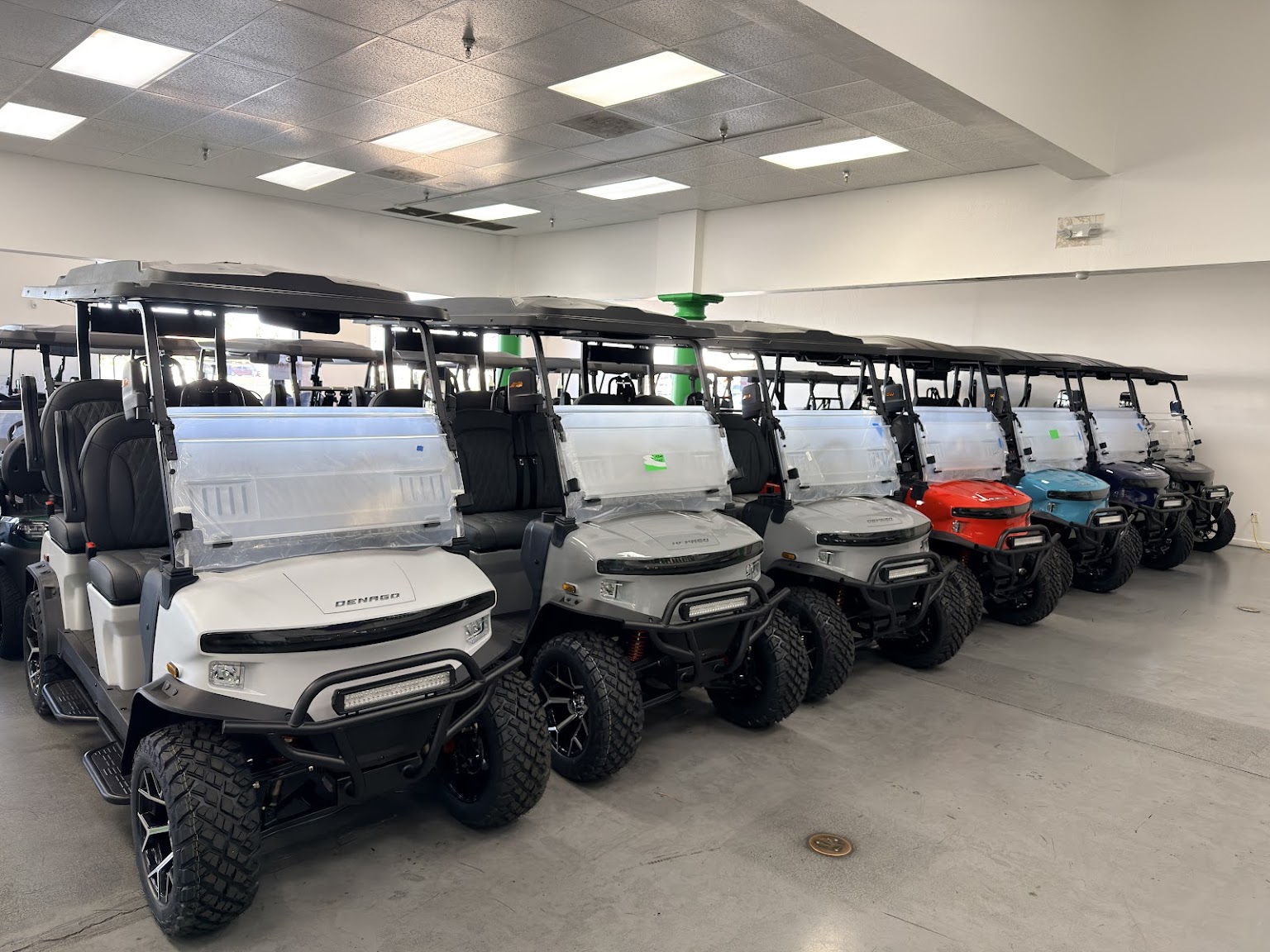
Golf carts in Arizona can cost anywhere from around $4,000 for an older used model to more than $20,000 for a premium, customized, or six-passenger cart. Most buyers shopping for a new electric golf cart can expect to spend approximately $9,000 to $16,000, depending on the brand, battery type, seating capacity, and included features.
That is a wide price range, but golf carts are not all built or equipped the same way. A basic two-passenger cart with lead-acid batteries will usually cost much less than a lifted six-passenger model powered by a large lithium battery.
Before comparing golf cart prices in Arizona, think about how you plan to use the vehicle. Passenger capacity, daily driving distance, street use, battery type, warranty coverage, and comfort features can all have a major effect on the final price.
Average Golf Cart Prices in Arizona
The table below provides a general idea of what different types of golf carts may cost in Arizona.
| Golf Cart Type | Typical Price Range |
|---|---|
| Older used golf cart | $4,000 to $7,000 |
| Newer used or reconditioned golf cart | $7,000 to $11,000 |
| New entry-level electric golf cart | $9,000 to $12,000 |
| New lithium golf cart | $10,000 to $16,000 |
| Lifted or customized golf cart | $12,000 to $20,000 or more |
| Six-passenger golf cart | $13,000 to $22,000 or more |
These ranges are estimates rather than guaranteed prices. The actual cost of a golf cart depends on the manufacturer, model, age, condition, battery, passenger capacity, accessories, warranty, and current dealership inventory.
Two carts with similar body styles may have very different prices because one includes a lithium battery, upgraded suspension, premium seats, street-use equipment, or a stronger warranty.
How Much Does a New Golf Cart Cost?
A new golf cart in Arizona will generally cost between $9,000 and $16,000, although premium models can exceed that range.
New golf carts cost more than most used models, but they also offer several advantages:
- Manufacturer warranty coverage
- New batteries and electrical components
- Modern displays and technology
- Improved suspension and braking
- More color and seating options
- Lower immediate repair risk
- Access to newer lithium battery systems
New-cart pricing can generally be divided into three levels.
Entry-Level New Golf Carts
An entry-level new golf cart may cost approximately $9,000 to $11,000.
These carts are usually a good fit for buyers who want reliable neighborhood or golf-course transportation without many premium upgrades. They may include standard seating, basic wheels, a windshield, mirrors, lighting, and either lead-acid batteries or a smaller lithium battery system.
Entry-level does not necessarily mean low quality. A simpler model may be the right choice when you do not need a lift kit, oversized wheels, premium audio, a touchscreen display, or seating for six passengers.
Mid-Range New Golf Carts
Mid-range golf carts often cost approximately $11,000 to $15,000.
At this price, buyers may find:
- Lithium batteries
- Four-passenger seating
- Digital displays
- Upgraded upholstery
- Larger wheels and tires
- Better suspension
- Backup cameras
- USB charging ports
- Improved lighting packages
- Additional storage
This is a popular range for Arizona residents who use their carts regularly in retirement communities, neighborhoods, resorts, and other approved areas.
Premium and Customized Golf Carts
Premium golf carts may cost $15,000 to $20,000 or more.
The higher price may reflect:
- Six-passenger seating
- Larger lithium battery systems
- Lift kits
- Custom wheels
- Premium seats
- Touchscreen displays
- Audio systems
- Custom paint
- Upgraded motors and controllers
- Enclosures
- Additional street-use equipment
Some buyers need these features, while others may be paying for upgrades they rarely use. Create a list of your must-have features before comparing models so you do not overspend on equipment that does not improve how you use the cart.
How Much Does a Used Golf Cart Cost in Arizona?
Used golf carts in Arizona can range from approximately $4,000 to more than $12,000.
Age is important, but it is not the only factor that determines value. A well-maintained older cart with newer batteries may be a better purchase than a newer-looking model that needs several thousand dollars in repairs.
Used Golf Carts Under $7,000
Lower-priced used golf carts are often older models with basic equipment.
They may have:
- Lead-acid batteries
- Visible cosmetic wear
- Older seats or body panels
- Limited technology
- Fewer safety features
- No remaining factory warranty
- Upcoming maintenance needs
A cart in this price range can still work well for occasional golf-course, neighborhood, or property use. However, buyers should have the battery, charger, brakes, tires, steering, and suspension inspected before purchasing.
An inexpensive cart can quickly become costly if it needs a full battery pack and several mechanical repairs shortly after the sale.
Used Golf Carts From $7,000 to $11,000
This range may include newer models, dealer-inspected carts, refurbished vehicles, and carts with desirable upgrades.
Possible features include:
- Four-passenger seating
- Newer batteries
- Lithium conversions
- Upgraded wheels
- Rear seats
- Windshields
- Lighting packages
- Improved upholstery
Ask what work was completed before the cart was listed. The term “reconditioned” can mean different things depending on the seller.
One dealer may replace the batteries, brakes, tires, seats, and worn suspension parts. Another may only clean the cart and make minor cosmetic improvements.
Used Golf Carts Over $11,000
Some recent used golf carts cost almost as much as new models. These vehicles may include lithium batteries, premium accessories, lift kits, six-passenger seating, or very low use.
Compare the used cart against a similar new model before buying. When the price difference is small, the stronger warranty and unused battery in a new cart may provide better overall value.
How Much Does a Lithium Golf Cart Cost?
A new lithium golf cart will generally cost approximately $10,000 to $16,000, with larger and more heavily equipped models costing more.
Lithium batteries increase the upfront price, but they offer several advantages over traditional flooded lead-acid batteries:
- Less routine maintenance
- Faster charging
- Lower battery weight
- Longer potential service life
- More consistent power
- No need to add water
- Better usable capacity
These benefits can be especially helpful for Arizona owners who drive frequently or do not want to regularly check water levels and clean battery terminals.
Battery size also affects the price. A larger lithium system may provide more driving range, but it may not be necessary for someone who only makes short trips around a neighborhood.
Our guide to the best lithium battery options for golf carts explains how different battery systems can affect range, performance, and everyday use.
How Much Does a Lithium Conversion Cost?
You do not always need to replace your entire golf cart to switch to lithium. Some lead-acid carts can be converted using a compatible lithium battery, charger, wiring, and battery management system.
The cost depends on:
- Battery voltage
- Battery capacity
- Charger requirements
- Cart make and model
- Wiring or mounting changes
- Installation labor
Read our complete guide to how much a lithium battery upgrade costs for a closer look at conversion expenses.
Lead-Acid vs. Lithium Golf Cart Prices
Lead-acid golf carts generally cost less at the time of purchase. Lithium-powered models tend to cost more upfront but require less battery maintenance.
| Factor | Lead-Acid Battery | Lithium Battery |
|---|---|---|
| Initial purchase price | Usually lower | Usually higher |
| Battery maintenance | Requires regular care | Minimal routine care |
| Battery weight | Heavier | Lighter |
| Charging time | Typically longer | Typically faster |
| Power while discharging | May gradually decrease | Usually more consistent |
| Battery replacement cost | Lower upfront | Higher upfront |
| Potential service life | Generally shorter | Generally longer |
Lead-acid may make sense for a buyer focused on the lowest possible initial price. Lithium may provide better long-term value for someone who drives frequently, values convenience, or plans to keep the cart for several years.
Proper care still matters with either battery type. Our golf cart battery maintenance guide covers charging, storage, inspections, and common battery problems.
How Passenger Capacity Affects Golf Cart Prices
Passenger capacity is one of the largest factors affecting golf cart cost. Larger carts need longer frames, additional seating, stronger suspension, and enough battery power to carry the added weight.
Two-Passenger Golf Cart Prices
Two-passenger golf carts are generally the most affordable option.
They work well for:
- Golf-course use
- Couples
- Individual transportation
- Short neighborhood trips
- Light property work
They are also easier to park and maneuver than longer carts. Read more about the benefits of two-seater golf carts before deciding whether you need additional seating.
Four-Passenger Golf Cart Prices
Four-passenger golf carts usually cost more because of their additional seating, frame length, and suspension requirements.
The rear seat may face forward or backward. Rear-facing seats sometimes convert into a small cargo platform, which can make the cart more useful for errands or carrying equipment.
Four-passenger models are popular among Arizona families, couples who regularly transport guests, and residents who want more flexibility.
Our two-seater versus four-seater golf cart comparison can help you compare space, maneuverability, cost, and daily use.
Six-Passenger Golf Cart Prices
Six-passenger golf carts generally fall near the higher end of the price range. New models often start around $13,000, while premium configurations may cost much more.
They require:
- A longer frame
- More seating
- Stronger suspension
- Greater battery capacity
- More powerful electrical components
- Additional braking support
Six-passenger carts can be useful for large families, resorts, community transportation, events, tours, and commercial properties.
Before paying for the largest model available, consider how often every seat will actually be occupied. Our guide to the benefits of six-seater golf carts explains when the additional space may be worth the cost.
You can also review our broader guide to choosing the right golf cart size.
How Much Does a Street-Legal Golf Cart Cost in Arizona?
A golf cart equipped for public-road use generally costs more than a basic course cart because it needs additional safety equipment and documentation.
Depending on the vehicle and how it will be used, equipment may include:
- Headlights
- Brake lights
- Turn signals
- Mirrors
- Seat belts
- Horn
- Reflectors
- Speedometer
- Windshield
- Vehicle identification information
Registration, insurance, licensing, and local road restrictions may also apply.
Buyers should verify current requirements before purchasing a cart for road use. Read what you need to know before buying a street-legal golf cart for a more detailed overview.
What Features Increase a Golf Cart’s Price?
Optional features can add hundreds or thousands of dollars to the final cost.
Common price-increasing upgrades include:
- Lithium batteries
- Larger battery capacity
- Lift kits
- Oversized wheels and tires
- Premium seats
- Four- or six-passenger seating
- Windshields
- Enclosures
- Audio systems
- Touchscreen displays
- Backup cameras
- Custom paint
- Storage accessories
- Upgraded suspension
- Higher-performance motors and controllers
- Street-use equipment
Arizona buyers may also want cooling fans, shade accessories, seat covers, storage, and protection from sun exposure. Our guide to the best golf cart accessories for hot Arizona summers covers upgrades designed for the local climate.
Focus first on features that improve safety, comfort, and how you plan to use the cart. Cosmetic upgrades can always be added later.
Other Golf Cart Costs to Consider
The advertised price is not always the final amount you will spend.
Taxes, Title, and Registration
Depending on the vehicle and intended use, buyers may need to pay sales tax, title fees, registration expenses, and other charges.
Ask the dealership which costs are included in the advertised price and which will be added during the purchase.
Insurance
Insurance may be required for certain road uses or financing agreements. Even when it is not required, coverage may be worth considering for a high-value cart.
Battery Replacement
The battery is one of the most expensive components on an electric golf cart.
When buying used, ask:
- How old is the battery?
- Is it lead-acid or lithium?
- Has it been tested?
- How well does it hold a charge?
- Is there a transferable warranty?
- Is the correct charger included?
- Are service records available?
Do not rely only on how the cart performs during a brief test drive. A weak battery can appear functional before losing power during extended use.
Maintenance and Repairs
Possible ownership expenses include:
- Tires
- Brakes
- Steering
- Suspension
- Wheel alignment
- Chargers
- Electrical components
- Battery cables
- Lights
- Seat repairs
- Body damage
Following a preventative golf cart maintenance schedule can help reduce the risk of larger repairs.
Delivery
Delivery costs may depend on the cart’s size, dealership location, and delivery distance. Confirm delivery charges before finalizing the purchase.
Is It Better to Buy a New or Used Golf Cart?
Neither option is automatically better for every buyer.
Consider buying new when you want warranty coverage, newer technology, a factory lithium system, a specific configuration, and lower immediate repair risk.
Consider buying used when your main goal is a lower purchase price and you find a cart with a tested battery, clear maintenance history, and major components in good condition.
Always compare the total value rather than focusing only on the sticker price. A new cart may cost more but include a new battery, stronger warranty, and fewer immediate repairs. A well-maintained used cart may provide excellent value when its condition has been properly verified.
The season can also affect selection and available offers. Review our guide to the best time to buy a golf cart before beginning your search.
Can You Finance a Golf Cart in Arizona?
Many dealerships offer financing for qualified buyers. Financing allows you to spread the purchase cost over monthly payments instead of paying the full amount upfront.
Your payment may depend on:
- Purchase price
- Down payment
- Credit history
- Interest rate
- Loan term
- Current promotions
- Accessories included in the purchase
- Taxes and other fees
Do not evaluate a financing offer based only on the monthly payment. Compare the total amount paid, interest rate, loan length, and any additional charges.
How to Get the Best Value on a Golf Cart
Use these steps to narrow your options and avoid paying for the wrong cart:
- Decide how many passengers you regularly need to carry.
- Estimate how far you expect to drive between charges.
- Compare lithium and lead-acid batteries.
- Ask about battery age, testing, and warranty coverage.
- Test-drive the cart before purchasing.
- Inspect the brakes, tires, steering, suspension, and lights.
- Compare standard equipment rather than price alone.
- Ask whether the dealer provides local service and parts.
- Review all financing terms carefully.
- Consider the cart’s future trade-in or resale value.
A dependable dealership should be able to explain the cart’s equipment, battery, warranty, service options, and total purchase cost.
Shop New and Used Golf Carts in Arizona
Golf Car Superstore helps Arizona buyers compare new and pre-owned electric golf carts from several popular manufacturers.
Our golf cart inventory includes different seating configurations, lithium battery systems, colors, equipment packages, and price points. We also offer financing options, trade-in assistance, parts, accessories, maintenance, and repair services.
Browse our current golf cart inventory to compare available models and prices, or visit Golf Car Superstore in Sun City West or Scottsdale to see your options in person.