
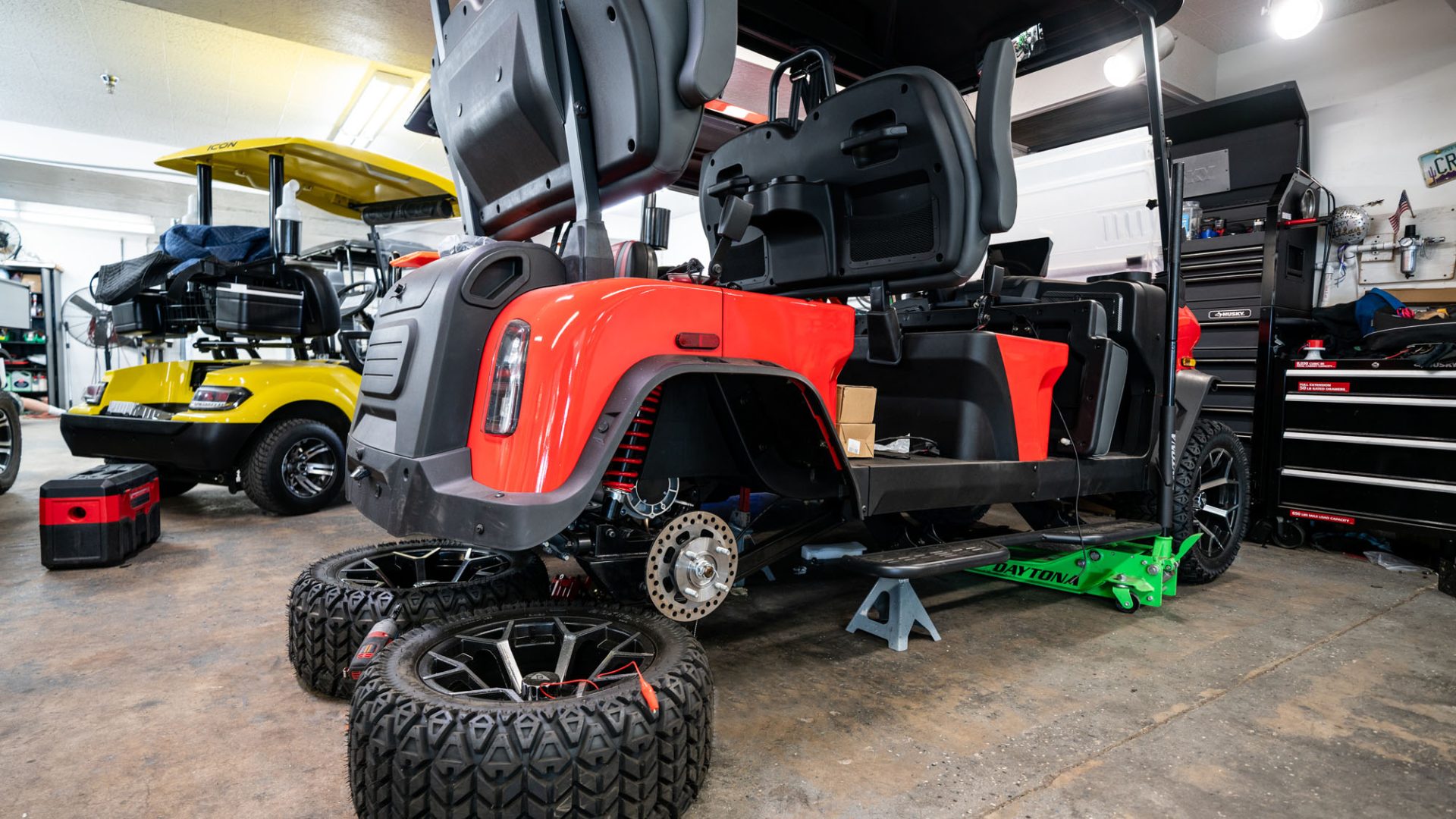
Golf cart tires affect much more than the appearance of your cart. They influence traction, braking, steering, ride quality, and overall safety. Although some tire problems are easy to spot, others develop slowly and may not become obvious until the cart begins pulling, vibrating, or losing air.
Arizona’s high temperatures and strong sunlight can also cause golf cart tires to age before the tread is completely worn. Knowing when to replace your golf cart tires can help prevent flats, poor handling, and damage to other parts of the cart.
DID YOU KNOW? At Golf Car Superstore, we help golf cart owners choose tires that fit their carts and the way they drive. If your tires are worn, cracked, or losing air, our team provides professional golf cart tire installation for many popular makes and models. Call now or visit our Request Service page.
How Long Do Golf Cart Tires Usually Last?
There is no single replacement schedule that applies to every golf cart tire. Tire life depends on how often the cart is driven, the surfaces it travels over, the amount of weight it carries, and how it is stored.
Several factors can affect how long golf cart tires last:
- Driving frequency and total mileage
- Pavement, turf, gravel, or off-road use
- Proper tire inflation
- Wheel alignment and suspension condition
- Passenger and cargo weight
- Tire quality and tread design
- Outdoor storage and sun exposure
- Arizona heat and dry weather
A frequently driven cart may wear through its tread over time. A lightly used cart may still need new tires because the rubber has become dry, brittle, or cracked. For that reason, tire condition is often more important than mileage alone.
Signs It Is Time to Replace Your Golf Cart Tires
You should inspect your golf cart tires regularly and before longer trips. Compare all four tires because one may be wearing differently from the others.
The following warning signs may mean that your tires need repair, replacement, or a professional inspection.
Low or Uneven Tread
Tread helps a golf cart maintain traction when accelerating, turning, and braking. As the tread wears down, the tires may have less grip on pavement, loose dirt, or wet surfaces.
Uneven tread wear can appear along one edge, across the center, or in isolated patches. This may be caused by:
- Overinflated or underinflated tires
- Incorrect wheel alignment
- Worn steering or suspension parts
- Damaged wheels
- Uneven weight distribution
Replacing the tires may improve traction, but it will not correct an alignment or suspension problem. The cause of uneven wear should be identified before or during installation so the new tires do not develop the same problem.
Sidewall Cracking and Arizona Dry Rot
Golf cart tires can develop dry rot as their rubber loses flexibility. Arizona’s heat, dry air, and intense UV exposure can speed up this process, especially when a cart is stored outdoors.
Signs of golf cart tire dry rot include:
- Small cracks along the sidewalls
- Cracking between tread blocks
- Faded, hard, or brittle rubber
- Rubber beginning to flake or separate
- Repeated air loss without an obvious puncture
A tire can have deep tread and still be unsafe because of dry rot. If cracks are deep, widespread, or located near the bead where the tire meets the wheel, replacement is usually the safer choice.
Bulges, Cuts, or Exposed Cords
A bulge in the tread or sidewall can indicate internal tire damage. Deep cuts, exposed cords, and separating tread are also serious warning signs.
These problems can weaken the tire and increase the risk of sudden failure. Do not continue driving or repeatedly adding air to a tire with a bulge, deep cut, or visible internal material. Have the tire inspected and replaced if necessary.
Punctures and Frequent Air Loss
A small puncture in the main tread area may be repairable if the rest of the tire remains in good condition. However, frequent air loss can indicate more than a simple puncture.
Possible causes include:
- A nail, screw, or other embedded object
- A damaged valve stem
- A bent or corroded wheel
- A poor seal between the tire and wheel
- Sidewall damage
- Cracking caused by dry rot
If you need to add air regularly, have the tire and wheel inspected. Sidewall punctures, large holes, dry rot, and heavily worn tires generally call for replacement instead of repair.
Vibration, Pulling, or Poor Handling
A damaged or unevenly worn tire can change how the cart feels on the road. You may notice:
- Vibration through the steering wheel
- The cart pulling to one side
- A rough or bumpy ride
- Reduced traction while turning
- Longer stopping distances
- Unusual tire or wheel noise
These symptoms may also be caused by alignment, wheel, steering, or suspension problems. A full inspection can determine whether the tires are the only issue or whether another part needs attention.
How Arizona Heat Affects Golf Cart Tires
Arizona weather can be especially hard on golf cart tires. Tire pressure increases as the air inside the tire becomes hotter. Pressure can also drop when temperatures fall, which means seasonal changes may affect how the tires perform.
Hot pavement and direct sunlight add even more heat to the rubber. Over time, this exposure can cause the tire to harden, fade, and crack. Tires stored outside may develop age-related damage even when the cart is rarely driven.
To help protect your tires:
- Check pressure when the tires are cool
- Use the pressure recommended by the tire or cart manufacturer
- Avoid driving on underinflated tires
- Inspect for cracking and fading regularly
- Store the cart in a garage, carport, or shaded area when possible
- Use a properly fitted cover if covered storage is unavailable
Do not lower tire pressure by a fixed amount simply because the weather is hot. Use an accurate gauge and follow the specifications for your cart and tires.
Can a Golf Cart Tire Be Repaired?
Not every flat tire needs to be replaced. A repair may be possible when the puncture is small, located within the tread area, and the tire still has good tread and flexible rubber.
Replacement is usually the better choice when:
- The puncture is in the sidewall
- The tire has several punctures
- The tread is heavily worn
- The tire has dry rot or deep cracks
- Internal cords are exposed
- The tire has a bulge or separated tread
- The wheel cannot maintain a reliable seal
A professional inspection can determine whether a damaged tire can be repaired safely. The damage visible from the outside may not show the full condition of the tire.
Choosing Between Street, Turf, and All-Terrain Tires
Replacing your golf cart tires is also an opportunity to choose a tread pattern that better fits how and where you drive.
Street Tires
Street tires are designed for paved community roads, parking areas, and neighborhood travel. They usually provide a smooth, quiet ride and predictable handling on hard surfaces.
Street tires are often a good choice for golf carts used in Sun City West, Scottsdale, Phoenix, Surprise, Peoria, and other communities where most trips take place on pavement.
Turf Tires
Turf tires use a tread pattern designed to provide traction while limiting damage to grass and landscaped surfaces. They are commonly used on golf courses, parks, resorts, and larger residential properties.
They are a practical option when protecting turf is more important than gaining aggressive off-road traction.
All-Terrain Tires
All-terrain golf cart tires have deeper, more aggressive tread for gravel, dirt, loose surfaces, and uneven ground. They can improve traction for property use and light off-road driving.
Larger all-terrain tires may affect:
- Fender and suspension clearance
- Ride height
- Turning radius
- Steering effort
- Acceleration and torque
- Electric driving range
Some larger tires require a lift kit or other modifications. Tire fitment should be confirmed before installation to prevent rubbing or handling problems.
How to Understand Golf Cart Tire Sizes
Golf cart tire sizes are usually printed on the sidewall. A common size is 18×8.50-8.
In this example:
- 18 is the approximate overall tire height in inches
- 8.50 is the approximate tire width in inches
- 8 is the wheel diameter in inches
Some low-profile street tires use a different sizing format, so it is important to confirm what each number means before ordering.
Choosing the right golf cart tire size involves more than matching the wheel diameter. You should also consider:
- The cart’s make and model
- Wheel width and offset
- Available fender clearance
- Suspension height
- Whether the cart has a lift kit
- Tire load rating
- Passenger and cargo capacity
- How the cart will be used
Installing a tire that is too large can cause rubbing during turns or when passengers are riding. A tire that does not match the wheel correctly may also create sealing, stability, or handling problems.
Should You Replace Two Golf Cart Tires or All Four?
You do not always need to replace all four golf cart tires at the same time. Replacing two may be reasonable when the other two are relatively new, have even tread, show no cracking, and match the new tires in size and type.
All four tires should be considered when:
- They are close to the same age
- Cracking appears on several tires
- Tread is worn across the full set
- You are changing tire sizes
- You are switching from turf to street or all-terrain tires
- The existing tires have different tread patterns or sizes
- You recently purchased a used cart and do not know the tires’ history
At a minimum, tires on the same axle should match in size, construction, and general tread condition. A matched set can provide more predictable steering, braking, and ride quality.
Check Alignment and Suspension Before Installing New Tires
If your old tires have uneven wear, new tires alone may not solve the problem. Wheel alignment, steering components, bushings, bearings, or suspension parts may need attention.
Before new tires are installed, it may be helpful to inspect:
- Wheel alignment
- Steering linkage
- Suspension bushings
- Wheel bearings
- Wheels and valve stems
- Tire pressure across the full set
Correcting these issues can help the new tires wear more evenly and improve how the cart handles.
Professional Golf Cart Tire Installation in Arizona
Proper tire installation helps protect the tires, wheels, and cart. It also provides an opportunity to catch damaged valve stems, bent wheels, uneven wear, and clearance problems before they become more expensive.
Golf Car Superstore provides professional golf cart tire replacement and installation in Arizona. Our team can help you select the correct tire size and compare street, turf, and all-terrain options based on your cart and driving needs.
We serve golf cart owners in Sun City West, Scottsdale, Phoenix, Surprise, Peoria, Glendale, Buckeye, and surrounding communities across the West Valley and East Valley.
Schedule Golf Cart Tire Replacement
Low tread, dry rot, bulges, repeated air loss, and poor handling should not be ignored. Arizona heat can weaken golf cart tires even when the cart has low mileage, so regular inspections are an important part of routine maintenance.
If you are unsure whether a tire can be repaired or needs to be replaced, Golf Car Superstore can inspect its condition and recommend the right option. Schedule professional golf cart tire installation to improve traction, handling, and ride quality.
Frequently Asked Questions
How often should golf cart tires be replaced?
Golf cart tires should be replaced based on their condition rather than mileage alone. Low tread, cracking, bulges, repeated air loss, or poor handling can all indicate that replacement is needed.
Do golf cart tires develop dry rot in Arizona?
Yes. Arizona heat, dry air, and UV exposure can cause golf cart tire rubber to harden and crack. This can happen even when a cart is driven infrequently and still has plenty of tread.
Can you drive a golf cart with cracked tires?
Deep or widespread cracks can weaken the tire and increase the risk of air loss or failure. Tires with significant cracking, exposed cords, or bulges should be inspected before the cart is driven again.
Can a flat golf cart tire be repaired?
Some small punctures in the tread area can be repaired if the tire is otherwise in good condition. Sidewall damage, dry rot, large punctures, and badly worn tread usually require replacement.
Do I need to replace all four golf cart tires at once?
Not always. Two tires may be replaced when the other two remain in good condition and are compatible with the new tires. Replacing all four is often better when the entire set is old, cracked, unevenly worn, or being changed to a different size or tread type.
What size tires fit my golf cart?
The correct size depends on the cart model, wheel size, suspension clearance, lift kit, and intended use. Check the current tire sidewall and confirm fitment before purchasing larger or wider tires.
Why are my golf cart tires wearing unevenly?
Uneven wear may be caused by incorrect tire pressure, wheel misalignment, damaged wheels, or worn steering and suspension parts. The underlying issue should be corrected before it damages a new set of tires.
Where can I get golf cart tires installed near me?
Golf Car Superstore provides golf cart tire installation for customers across the Phoenix area, including Sun City West, Scottsdale, Surprise, Peoria, Glendale, Buckeye, and surrounding Valley communities.