
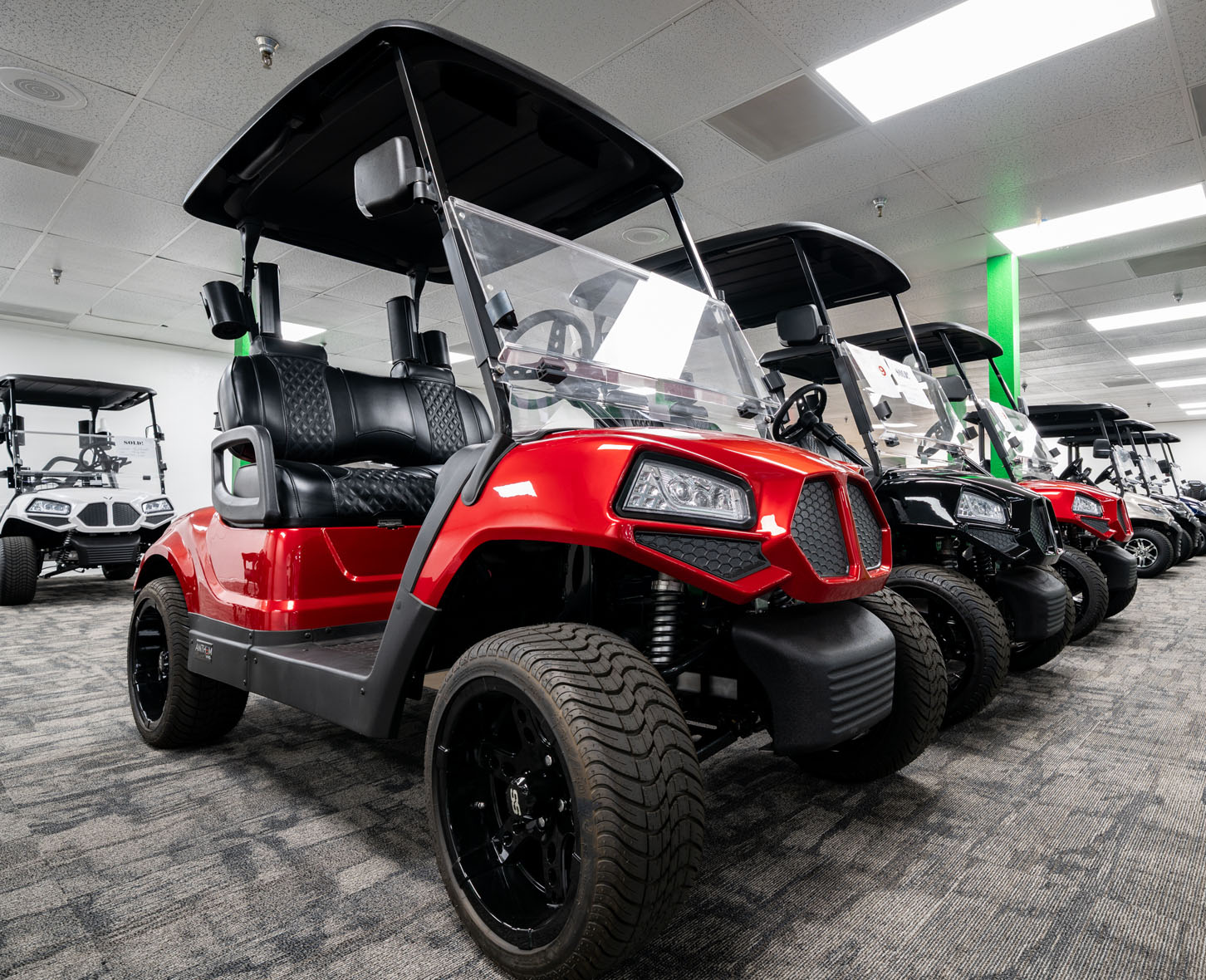
Golf carts are used for much more than traveling between holes. They provide convenient transportation through neighborhoods, active-adult communities, resorts, campuses, commercial properties, and other low-speed environments.
Although golf carts are smaller and slower than passenger cars, they can still be involved in serious collisions, rollovers, and passenger injuries. Safe operation requires more than knowing how to press the accelerator and brake. Drivers must understand the cart’s limits, inspect it regularly, protect passengers, and adjust their driving to the road, weather, and surrounding traffic.
Use this golf cart safety checklist before and during every trip.
Read the Golf Cart Owner’s Manual
Every golf cart has its own controls, operating limits, maintenance schedule, and safety features. Read the owner’s manual before driving a new or unfamiliar cart.
The manual should provide information about:
- Maximum passenger and weight capacity
- Recommended tire pressure
- Battery charging procedures
- Approved operating conditions
- Dashboard indicators and warning lights
- Proper braking and parking procedures
- Maintenance and inspection schedules
Keep the manual somewhere accessible. If you purchase a pre-owned cart without one, contact the manufacturer or dealership to request the correct manual for its model and year.
Complete a Pre-Drive Golf Cart Safety Check
A short inspection can identify problems before they cause a breakdown or affect your ability to steer and stop. This is especially important if the cart has been parked for an extended period or will be used on community streets.
Before driving, check:
- Tires: Look for visible damage, uneven wear, and low pressure. Check pressure while the tires are cold and follow the manufacturer’s recommendation.
- Brakes: Confirm that the brake pedal and parking brake work properly.
- Steering: Make sure the steering wheel moves normally without excessive looseness.
- Lights and signals: Test the headlights, taillights, brake lights, and turn signals when equipped.
- Mirrors: Clean and adjust them from your normal driving position.
- Horn: Verify that it works if the cart is equipped with one.
- Battery or fuel: Make sure you have enough charge or fuel for the planned trip.
- Loose items: Secure golf bags, groceries, tools, coolers, and personal belongings.
- Leaks or damage: Look beneath the cart and around the battery or engine compartment for anything unusual.
Do not drive if the cart has weak brakes, damaged tires, loose steering, exposed wiring, a battery leak, or another condition that could affect safe operation.
Keep Every Passenger in a Designated Seat
A golf cart should carry only the number of people it is designed to seat. Do not allow passengers to sit on laps, stand on the floorboard, hang from the sides, or ride in a cargo bed.
Before moving the cart:
- Make sure everyone is fully seated.
- Use installed seat belts as intended.
- Keep arms and legs inside the cart.
- Confirm that rear-facing passengers have secure handholds and foot support.
- Wait until passengers are prepared before accelerating.
Never add passengers simply because there appears to be open space. Passenger limits are based on the cart’s seating, weight capacity, suspension, braking, and overall design.
Do Not Exceed the Weight Limit
The cart’s total load includes the driver, passengers, cargo, and installed accessories. Rear seats, utility boxes, large wheels, coolers, and other modifications all add weight.
Overloading can affect:
- Braking distance
- Steering response
- Stability during turns
- Suspension performance
- Battery range
- Motor or engine load
Check the owner’s manual for the cart’s passenger and cargo limits. Distribute cargo evenly and secure it so it cannot shift or fall while the cart is moving.
Drive at a Safe Speed for the Conditions
A posted speed limit is a maximum, not a requirement. Reduce your speed when visibility, traffic, road surfaces, or weather conditions make the posted limit unsafe.
Slow down near:
- Intersections and crosswalks
- Driveways and parking lots
- Pedestrians and bicyclists
- Community centers and recreational areas
- Curves and slopes
- Wet, sandy, or uneven surfaces
- Areas with limited visibility
Golf carts provide less protection than enclosed passenger vehicles. Driving slower gives you more time to identify a hazard and stop.
Slow Down Before Turning
Golf carts have different weight distribution and handling characteristics than cars. A sharp turn taken too quickly can cause passengers to lose balance and may increase the risk of a rollover.
Brake before entering the turn, then steer smoothly through it. Avoid sudden direction changes, especially when the cart is carrying several passengers or heavy cargo.
Lift kits, oversized tires, rear seats, and other modifications can change the cart’s center of gravity and handling. After a modification, test the cart at low speed in a controlled area before returning to normal use.
Use Extra Care on Hills and Uneven Ground
Follow the manufacturer’s instructions for operating on slopes. Avoid hills that exceed the cart’s rated capability and do not drive across a steep incline.
Approach slopes at a controlled speed and travel in the recommended direction. Sudden braking, acceleration, or turning on a hill can reduce stability.
Uneven terrain can also hide holes, rocks, curbs, and soft ground. Do not assume that a lifted cart or larger tires make it suitable for every off-road surface.
Leave Enough Room to Stop
Maintain a safe distance from carts, vehicles, and bicycles ahead of you. Golf cart stopping distance can change based on speed, passenger weight, tire condition, brake condition, slopes, and road surfaces.
Allow additional space when:
- The pavement is wet or covered in loose sand.
- You are traveling downhill.
- The cart is carrying several passengers.
- Visibility is limited.
- You are driving behind a larger vehicle.
Avoid following another vehicle so closely that you cannot react if it stops suddenly.
Check Carefully Before Reversing
Golf carts may have limited rear visibility, especially when equipped with rear seats, golf bags, enclosures, or cargo accessories.
Before backing up, check your mirrors and look over your shoulder. Reverse slowly and watch for children, pedestrians, pets, curbs, posts, and other vehicles.
If your view is blocked, ask a passenger to step out and guide you from a safe position. Never rely only on a backup alarm or camera.
Watch for Pedestrians and Bicyclists
Golf carts often share space with people walking, biking, or using mobility devices. Reduce your speed when approaching them and provide plenty of room when passing.
Be prepared for pedestrians to change direction unexpectedly, especially in parking areas, near community facilities, and around recreational paths. Follow applicable right-of-way rules and never block a crosswalk or pedestrian route when parking.
Avoid Distracted Driving
Do not text, scroll, or hold a phone while operating a golf cart. Even a brief distraction can prevent you from seeing a pedestrian, stop sign, curb, or approaching vehicle.
Set navigation and music before moving. If you need to adjust a device or retrieve an item, stop in a safe location and set the parking brake.
Drivers should also avoid eating, turning around to speak with rear passengers, or reaching for loose objects while the cart is moving.
Never Drive Under the Influence
Do not operate a golf cart after consuming alcohol, cannabis, or medication that affects your judgment, coordination, vision, or reaction time.
A golf cart’s lower speed does not eliminate the risk of injury. Impaired driving can lead to collisions, rollovers, falls, property damage, and legal consequences. Arrange for a sober driver or another form of transportation.
Use Lights and Reflective Equipment After Dark
Only drive after dark when the cart has the required equipment and nighttime operation is permitted. Use functioning headlights, taillights, brake lights, and turn signals when equipped.
Golf cart headlights may not illuminate as far ahead as automobile headlights. Reduce your speed and watch closely for pedestrians, animals, road debris, parked vehicles, and unmarked curbs.
Keep lights and reflectors clean so other drivers can see the cart. Reflective materials can improve visibility but do not replace required lighting.
Prepare for Arizona Heat and Monsoon Weather
Arizona weather can quickly change driving conditions. Extreme heat can affect batteries, tires, and driver comfort, while monsoon storms may bring rain, wind, dust, and reduced visibility.
During hot weather:
- Check the battery charge before longer trips.
- Carry drinking water for the driver and passengers.
- Park in the shade when possible.
- Avoid leaving children, pets, or vulnerable passengers in a parked cart.
- Watch for signs of battery, motor, or engine trouble.
Do not drive into a dust storm or flooded area. If visibility becomes poor, move away from traffic to a safe location and wait for conditions to improve. Wet pavement, mud, and loose sand can also increase stopping distance and reduce control.
Follow Arizona Public-Road Requirements
Do not assume that every golf cart can legally operate on public streets. Arizona distinguishes between golf carts, neighborhood electric vehicles, low-speed vehicles, and other vehicle types. A cart’s design, speed, weight, seating capacity, and equipment can affect its classification.
A motor vehicle regularly operated on an Arizona public highway generally requires:
- A properly licensed driver
- Current registration
- Financial responsibility, such as liability insurance
- Required lights and safety equipment
- Compliance with state and local traffic laws
Exceptions may apply in limited situations, including certain golf carts used in golf-course operations or moved only incidentally on a highway. Local authorities, private communities, and homeowners associations may also restrict approved routes, crossings, speeds, parking, and operating hours.
Before driving on a public road, verify the cart’s classification and current requirements with the Arizona MVD and the authority responsible for that roadway.
Park the Golf Cart Safely
When parking, bring the cart to a complete stop, place the direction selector in the correct position, set the parking brake, turn the cart off, and remove the key.
Park on a level surface whenever possible. Do not block traffic, sidewalks, accessibility routes, crosswalks, driveways, charging areas, or emergency access.
Take the key with you to prevent unauthorized use, especially when children or inexperienced drivers are nearby.
Charge Electric Golf Carts Safely
Use the charger approved for the cart’s battery system. Charge in a dry, shaded, and properly ventilated location according to the manufacturer’s instructions.
Before charging:
- Inspect the cable and plug for visible damage.
- Make sure the charging port is clean and dry.
- Keep the charger uncovered so heat can escape.
- Keep combustible materials away from the charging area.
- Do not use an extension cord unless the manufacturer permits it.
Stop using the charger if you notice overheating, melted insulation, unusual odors, sparks, or repeated charging faults. Have the battery and charging system inspected before using them again.
Keep Up With Preventive Maintenance
A golf cart that cannot steer, stop, or respond correctly is unsafe regardless of how carefully it is driven. Follow the manufacturer’s service schedule and address changes in performance promptly.
Routine golf cart maintenance may include:
- Checking tire pressure and tread
- Inspecting brakes and the parking brake
- Testing steering and suspension components
- Maintaining the battery and charging system
- Checking lights, signals, mirrors, and the horn
- Inspecting cables, terminals, and electrical connections
- Servicing the engine and fuel system on gas carts
Schedule professional service if the cart pulls to one side, makes unusual noises, loses range, charges improperly, has weak brakes, or develops loose steering. Golf Car Superstore’s golf cart service department can inspect and repair major systems.
Know What to Do if the Cart Breaks Down
If the cart loses power or develops a problem while driving, move out of traffic if you can do so safely. Turn it off, set the parking brake, and keep passengers away from moving vehicles.
Do not push, tow, or work on the cart unless you understand the manufacturer’s procedures. Electric golf carts may move unexpectedly if they have not been placed in the proper tow or maintenance mode.
Contact a qualified service provider when the cart cannot be moved safely or has a battery, electrical, steering, or braking problem.
Frequently Asked Questions About Golf Cart Safety
Are golf carts easy to drive?
The basic controls are usually simple, but safe driving still requires practice and attention. New drivers should learn the controls, braking response, turning radius, and handling in a controlled area before entering traffic.
Should you wear a seat belt in a golf cart?
Use installed seat belts as intended. Every passenger should remain in a designated seat and keep arms and legs inside the cart while it is moving.
Can passengers ride in the cargo area?
No. Cargo beds and folded platforms are not passenger seats. Riders should only use designated seating positions with proper foot support and restraints when provided.
Can children drive golf carts?
Driver requirements depend on where the cart is operated. Arizona public-highway operation generally requires a valid driver’s license unless a specific exemption applies. Private properties and communities may establish additional age and supervision rules.
Can any golf cart be driven on Arizona streets?
No. The cart must qualify for its intended use and meet applicable licensing, registration, insurance, equipment, and local roadway requirements. Verify these details before entering a public street.
How often should a golf cart receive service?
Follow the maintenance intervals in the owner’s manual. Usage, age, battery type, terrain, weather, and storage conditions can affect how frequently service is needed.
Golf Cart Sales and Service in Arizona
Golf Car Superstore helps Arizona owners select, maintain, and equip golf carts for their transportation needs. Available brands include Denago EV, Advanced EV, Atlas Carts, Aries EV, and more.
We serve customers from Sun City West, Scottsdale, Phoenix, Buckeye, Surprise, Peoria, Goodyear, Paradise Valley, Cave Creek, Carefree, and surrounding West Valley and East Valley communities.
Browse our current golf cart inventory or contact Golf Car Superstore for help choosing a cart with the seating, visibility, lighting, battery, and other features that fit your intended use.