
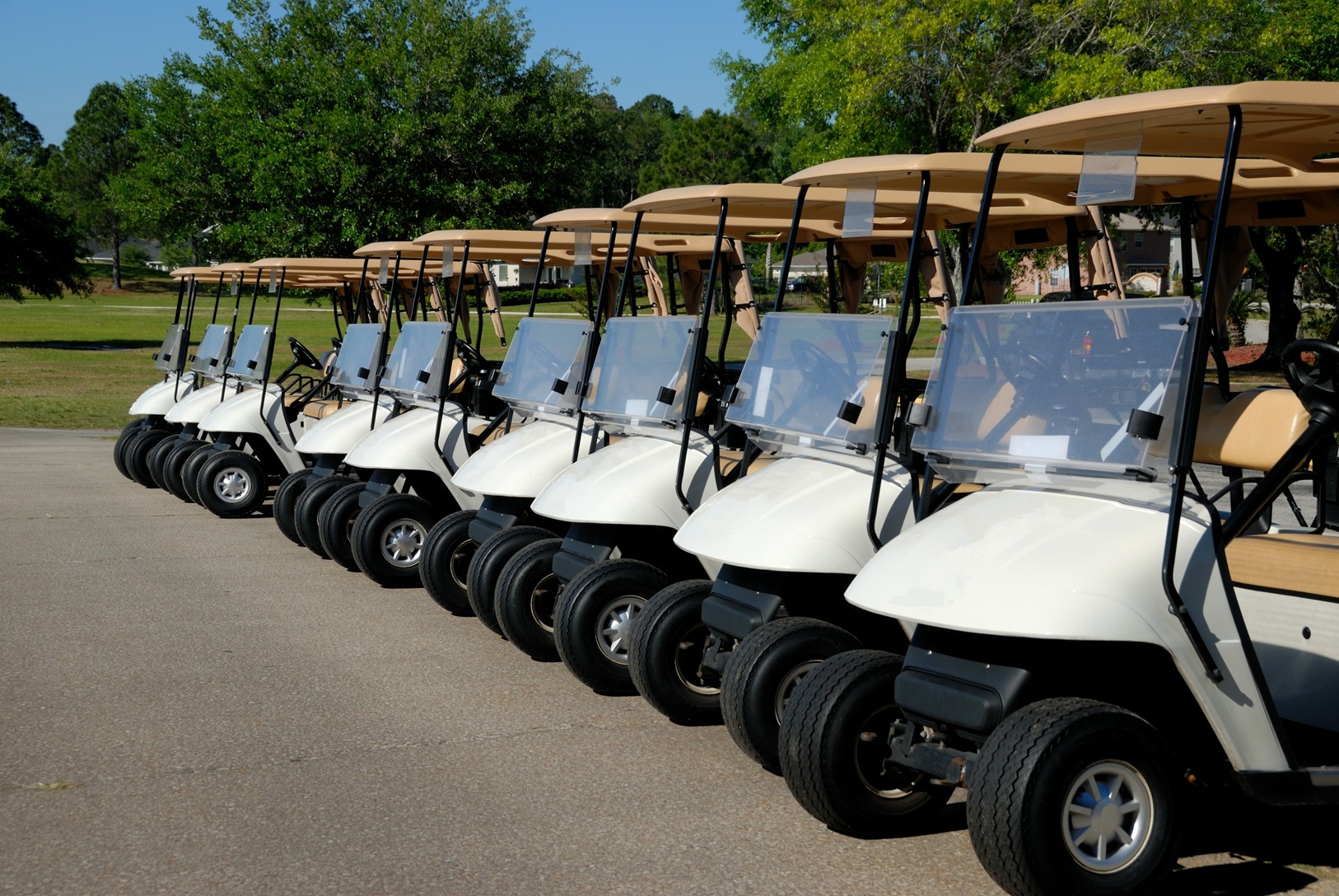
Golf carts provide convenient transportation on golf courses, through residential communities, and around private properties. Although they travel at lower speeds than most passenger vehicles, they still require careful and responsible operation.
Following proper golf cart driving etiquette helps protect passengers, pedestrians, golfers, landscaping, and other vehicles. The exact rules depend on where you are driving, so always follow posted signs, course policies, community regulations, and applicable traffic laws.
Use these golf cart safety tips to create a safer and more courteous experience wherever you drive.
Know Which Rules Apply Before You Drive
Golf cart rules are not the same everywhere. A golf course may restrict carts to designated paths, while a private community may have its own routes, parking areas, operating hours, and driver requirements. Public-road use is governed by state and local traffic laws.
Before driving, determine whether you are on:
- A golf course or cart path
- Private residential or commercial property
- A street maintained by a community or homeowners association
- A city, county, or state-maintained public road
Do not assume that permission to drive in one area allows you to operate the cart everywhere. Check posted signs and ask the course, property manager, homeowners association, or appropriate local authority when the rules are unclear.
Golf Cart Etiquette on the Course
Golf courses use cart rules to protect players and prevent unnecessary damage to the turf. Conditions can change throughout the day, especially after rain, irrigation, or maintenance. Check the course’s cart policy before beginning your round.
Follow Cart-Path-Only Restrictions
When a course posts “cart path only,” keep all four wheels on the designated path. Do not leave the path to drive closer to your ball, even if the ground appears dry.
These restrictions protect soft or recently maintained turf from ruts, compaction, and other damage. Golfers who have difficulty walking from the path should ask the course whether accessibility accommodations are available.
Understand the 90-Degree Rule
Some courses allow carts onto the fairway under the 90-degree rule. This generally means staying on the cart path until you are even with your ball, turning approximately 90 degrees, driving directly across the fairway to the ball, and returning to the path using a direct route.
The rule reduces the amount of time carts spend traveling along the turf. However, course-specific instructions always take priority. Do not leave the path if the course has imposed a cart-path-only restriction.
Stay Away From Greens, Tees, and Hazards
Keep golf carts away from putting greens, tee boxes, bunkers, water hazards, and other restricted areas. Follow all ropes, stakes, signs, and directional markings.
These areas are particularly vulnerable to damage. Never drive between a bunker and a putting green unless the course clearly provides a designated cart path through that area.
Avoid Damaging the Turf
Drive smoothly and avoid sudden acceleration, hard braking, and sharp turns. These actions can tear or displace grass, particularly when the ground is wet.
Drive around puddles, muddy areas, damaged turf, and locations where carts have already created visible wear. If the ground feels soft or unstable, return to the designated path.
Do Not Distract Other Golfers
Stop the cart and remain quiet when a nearby golfer is preparing to swing. Avoid unnecessary horn use, loud conversations, and high-volume music.
Position the cart where it will not interfere with another player’s shot or block the group behind you. When possible, park near the exit side of the green so your group can move efficiently toward the next hole after putting.
Golf Cart Etiquette in Neighborhoods and Communities
Golf carts are commonly used for local transportation in Arizona communities, including Sun City West and other parts of the West Valley. These areas may include pedestrians, bicyclists, pets, mobility devices, automobiles, and other golf carts.
Courteous community driving includes:
- Following posted signs and speed limits
- Yielding when required to pedestrians and other traffic
- Using turn signals or clear hand signals before turning
- Driving only on approved streets, paths, and crossings
- Leaving sidewalks and pedestrian paths clear unless cart use is specifically allowed
- Keeping music and other noise at a reasonable level
- Parking only in legal or designated spaces
Reduce your speed near intersections, driveways, parked vehicles, community centers, and areas with heavy foot traffic. Be prepared for pedestrians or vehicles to enter your path unexpectedly.
Follow Arizona Requirements for Public-Road Use
A golf cart used only on a golf course is treated differently from one regularly driven on public streets. In Arizona, a motor vehicle operated on a public highway generally requires a valid driver’s license, current registration, and financial responsibility such as liability insurance, subject to applicable exceptions.
The vehicle must also have the safety equipment required for its classification and intended use. A cart’s seating capacity, maximum speed, lighting, mirrors, windshield, seat belts, and other equipment may affect whether and where it can legally operate.
Do not assume that every golf cart is approved for public-road use. Verify the cart’s classification and equipment with the Arizona MVD, then check the rules for the city, county, or private community where you intend to drive. Local restrictions and posted signs may limit particular routes or uses.
Keep Every Passenger Properly Seated
Carry only the number of passengers for whom the cart provides designated seating. Never allow riders to stand, sit on another passenger’s lap, hang from the side, or ride in a cargo area.
Before moving:
- Make sure every passenger is fully seated.
- Use installed seat belts as intended.
- Confirm that arms, legs, and belongings are inside the cart.
- Wait until everyone is prepared before accelerating.
Rear-facing passengers may experience turns and stops differently than the driver. Accelerate, brake, and turn smoothly to reduce the risk of someone losing balance.
Slow Down Before Turns and Slopes
Golf carts have a different center of gravity and handling characteristics than passenger cars. Sharp turns, steep slopes, uneven ground, and sudden steering movements can increase the risk of losing control or tipping.
Reduce your speed before entering a turn rather than braking midway through it. Approach hills and slopes carefully, travel straight up or down when appropriate, and avoid driving across steep inclines. Never attempt terrain that exceeds the cart manufacturer’s recommendations.
Use additional caution when carrying several passengers or cargo because added weight can affect acceleration, braking, and handling.
Maintain a Safe Following Distance
Leave enough room between your cart and the vehicle ahead to stop safely. Golf carts may respond differently based on speed, passenger weight, tire condition, road surface, and braking-system condition.
Increase your following distance when:
- The pavement or grass is wet
- Visibility is limited
- You are traveling downhill
- The cart is carrying several passengers
- You are following a larger vehicle that blocks your view
Avoid following another golf cart so closely that you would be unable to react if it stops suddenly.
Check Behind You Before Reversing
Golf carts often have limited rear visibility, especially when equipped with rear seats, golf bags, enclosures, or cargo accessories. Check mirrors and look over your shoulder before backing up.
Reverse slowly and watch for children, pedestrians, pets, curbs, posts, and other carts. If your view is blocked, ask a passenger to step out and help guide you from a safe position.
Avoid Distracted Golf Cart Driving
Do not use a phone, adjust accessories, or reach for loose items while the cart is moving. Keep both hands available for steering and remain alert to changing traffic, pedestrians, course activity, and surface conditions.
Secure golf bags, coolers, tools, and personal belongings before driving. Loose items can shift during turns or fall from the cart, distracting the driver and creating a hazard for others.
Never Drive Under the Influence
Do not operate a golf cart after consuming alcohol, cannabis, or any substance that affects judgment, coordination, vision, or reaction time. Lower speed does not eliminate the risk of a collision, rollover, or serious injury.
Choose a sober driver or arrange another form of transportation if you are impaired. This applies on golf courses, in residential communities, and on public roads.
Use Lights and Increase Visibility After Dark
Only drive after dark if the cart is properly equipped and nighttime operation is allowed in that location. Use the required headlights, taillights, brake lights, and turn signals.
Slow down because golf cart headlights may not illuminate as far ahead as automobile headlights. Watch carefully for pedestrians, animals, curbs, road debris, and vehicles approaching from driveways or intersections.
Reflective materials and properly functioning lights can make the cart easier for others to see, but they do not replace attentive driving.
Inspect Your Golf Cart Before Driving
A brief safety check can identify problems that affect steering, braking, stability, or visibility. Before driving, inspect:
- Tire condition and inflation
- Brakes and parking brake
- Steering response
- Headlights, brake lights, and turn signals
- Mirrors and windshield visibility
- Seat belts, if equipped
- Battery charge or fuel level
- Loose items, accessories, or body components
If the cart pulls to one side, makes an unusual noise, has weak brakes, or shows another safety concern, stop using it until the problem can be inspected. Golf Car Superstore’s golf cart service department can help with routine maintenance and repairs.
Frequently Asked Questions About Golf Cart Etiquette
What is the 90-degree rule for golf carts?
The 90-degree rule generally allows drivers to leave the cart path by turning directly toward their ball, then return to the path using a direct route. The course’s posted instructions always take priority.
How close can a golf cart get to the putting green?
The required distance varies by course. Follow ropes, signs, painted lines, and directional markers, and keep the cart on the path near greens and tee boxes unless the course clearly directs otherwise.
Who has the right-of-way on a golf course?
Drivers should yield to golfers actively playing, pedestrians, maintenance workers, and anyone given priority by course rules. Never drive through another group’s line of play.
Can you drive a golf cart on public roads in Arizona?
A properly classified and equipped cart may be allowed on certain Arizona roads, but licensing, registration, insurance, equipment, and local route restrictions may apply. Confirm current requirements with the Arizona MVD and the local authority responsible for the roads you plan to use.
Can passengers stand or ride in a golf cart’s cargo area?
No. Passengers should occupy designated seats and use installed restraints as intended. Cargo platforms and utility beds are not passenger seats.
Should golf carts yield to pedestrians?
Drivers must follow applicable right-of-way rules and should always use care around pedestrians. Slow down, provide adequate space, and be prepared to stop in crosswalks, parking areas, and busy community locations.
Find a Golf Cart That Fits Your Lifestyle
Safe golf cart operation begins with choosing a model suited to your passengers, driving environment, and intended use. Features such as lighting, mirrors, seat belts, comfortable seating, and dependable brakes can make everyday operation safer and more convenient.
Golf Car Superstore in Sun City West serves customers from Sun City, Surprise, Peoria, Glendale, Phoenix, Buckeye, and communities throughout the West Valley. Browse our current golf cart inventory or visit our dealership to compare available models and features in person.